


Correct Installation of WBD Plates with Anchors
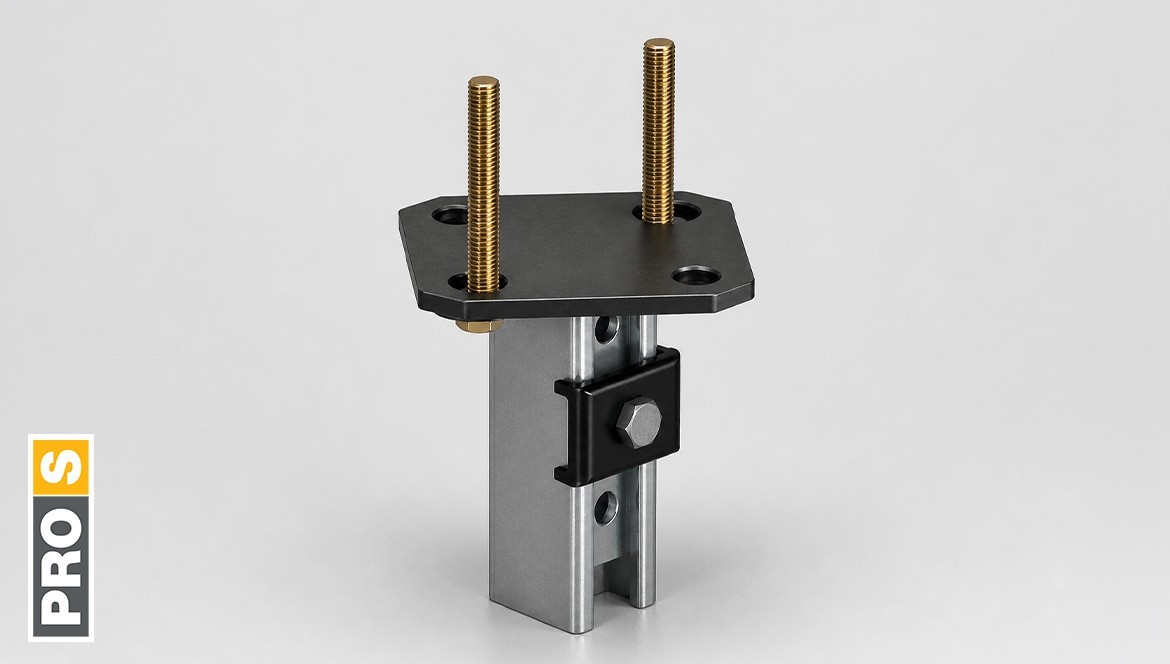
The correct fixing of WBD plates using anchors is a critical aspect in the design of support systems. Improper installation may compromise safety, performance, and regulatory compliance, especially under seismic actions.
In this technical guide, we outline in a clear and practical way how to correctly install these components, avoiding the most common on-site errors.
The WBD plates can be installed:
- on walls
- on ceilings
- on floors
Its design must always consider the most unfavorable load direction. But how many anchors should be used?
One of the most common mistakes observed on site is the use of all available holes under the assumption of increasing safety. In reality, it is not only unnecessary to use all four holes of the WBD plate, but only two anchors are required, positioned in the direction of the most critical loads, to ensure full structural safety.
Seismic Applications: Design Considerations
For seismic bracing systems, a correct design approach allows optimization of structural behavior under dynamic actions. Prosystem technical guidelines recommend the following best practices:
- the critical direction is generally longitudinal to the installation
- anchors must be aligned with this direction
- additional anchors not aligned with the load direction do not improve performance and may generate overlapping concrete failure cones, reducing the capacity of adjacent anchors
Anchor Design: Load Considerations
For proper design of WBD plate fixings, the following loads must be considered:
- weight of the pipelines
- weight of the supporting steel structure
- transverse actions (seismic loads, wind, thermal expansion)
A correct evaluation of these loads is essential to ensure long-term system stability.
Connection Between WBD Plate and 41 Channels
The connection between the plate and the channel is achieved by:
- dedicated clamping systems
- through-bolting (particularly for ceiling installations)
Technical note:
For significant ceiling applications, at least one through-bolt in the channel is required to ensure system safety.
Most Common Installation Errors
- use of all holes without design criteria
- misalignment of anchors with the load direction
- underestimation of seismic actions
- Conclusion: Safety and Performance Depend on Proper Fixing
The fixing of WBD plates is not a simple installation detail, but a key factor in ensuring the safety and reliability of the entire support system.
The fundamental rule to remember is:
WBD → anchors must be oriented in the direction of loads (not four anchors)
Applying these best practices improves system safety, ensures reliable structural performance, and reduces the risk of issues during testing or operation.
Technical Support for Support Systems
With Prosystem technical services, we support you in all phases:
- design and verification of support systems
- seismic design support
- BIM model development
- dedicated technical consulting
Do you have an ongoing project? Contact us for technical consulting or request sizing support.
In Same Category
- Summer and Thermal Expansion: When Pipe Support Systems Make the Difference
- Seismic Pipe Support Systems: The 7 Most Common Mistakes in MEP Seismic Design (and How to Avoid Them)
- Fastening SiFramo profiles with FLS self-tapping bolts: essential rules for a safe connection
- Design of Supports for Fire Protection Systems in Seismic Areas: Regulatory Approach, Technical Criteria, and Responsibilities
- RAL certification for support systems