


Design of Supports for Fire Protection Systems in Seismic Areas: Regulatory Approach, Technical Criteria, and Responsibilities
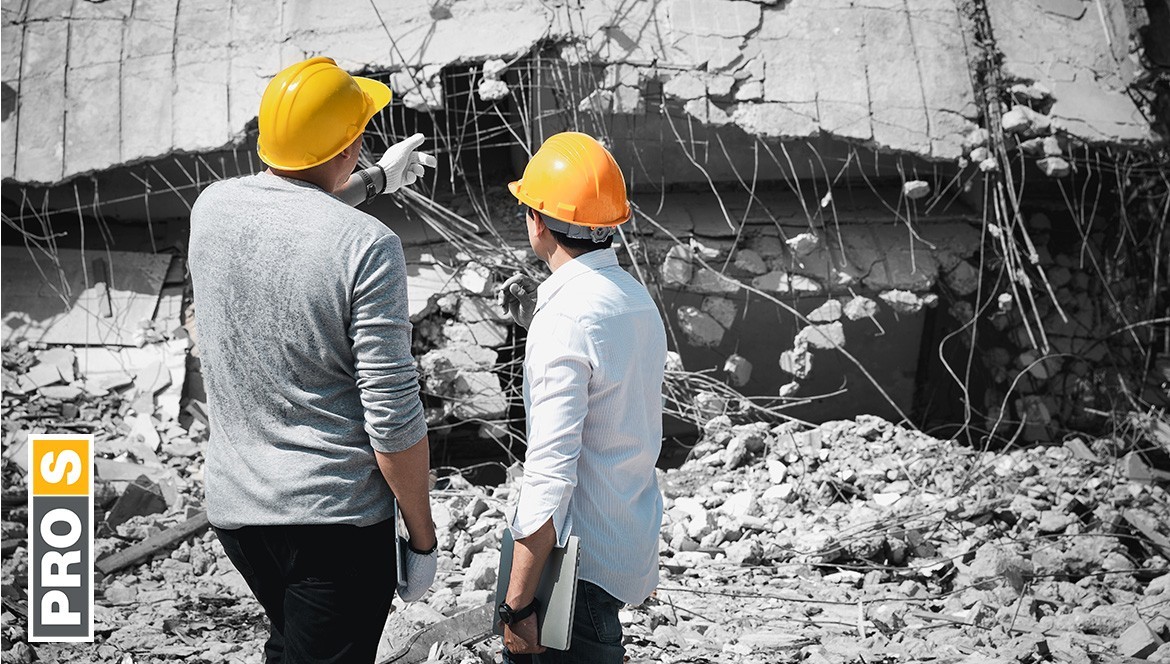
Seismic design of fire protection systems is now an essential element in ensuring safety, operational continuity, and regulatory compliance of buildings. In seismic contexts, it is not sufficient to guarantee the structural resistance of the building alone: it is equally crucial to ensure the stability and proper functioning of non-structural elements, including support systems.
Although these components do not directly contribute to the building’s structural resistance, they significantly impact safety and must be designed and verified in compliance with legal requirements.
The Role of Systems in Seismic Behavior
Even before seismic verification, systems must be dimensioned with respect to:
- static loads,
- environmental actions,
- thermal effects.
Regarding the latter, a very common example is pipe expansion, which affects the behavior of restraints and must be considered from the design phase—an aspect that is often overlooked. During an earthquake, systems are subjected to amplified accelerations, multidirectional oscillations, and combined stresses, behaving like highly vulnerable “suspended pendulums,” especially on upper floors where accelerations are greater.
Economic Impact and Regulatory Evolution
This vulnerability also has a significant economic impact: a large portion of post-earthquake repair costs is related to non-structural elements and systems. Support systems, in fact, have a relatively minor impact on the initial cost of a building but are crucial in limiting damage during seismic events.
Regulatory developments, particularly with the introduction of the 2018 NTC (Italian Building Code), have strengthened this approach by introducing more demanding seismic actions, more structured verification processes, and a clear definition of responsibilities among designers, manufacturers, installers, and construction supervisors.
The main required verifications are:
- Stability (STA) → ability to withstand seismic actions
- Strength (RES) → capacity of components
- Stiffness (RIG) → deformation behavior
- Ductility (DUT) → energy dissipation capacity
- Functionality (FUN) → operational continuity of the system
The last aspect is particularly critical: the system must remain functional during and after the seismic event.
Design Criteria and Restraint Dimensioning
System dimensioning is generally based on the equivalent static force method, which considers three main factors:
- system mass,
- floor acceleration,
- behavior factor.
This approach enables proper design of supports, anchors, and bracing systems, taking into account that accelerations at upper levels can be significantly amplified compared to ground-level values.
In this context, it is essential to distinguish between static supports, designed to carry the system’s weight, and seismic supports, designed to resist horizontal actions.
However, it should be noted that design does not require every support to be seismic; rather, it requires proper identification of restraint spans and optimization of bracing layouts according to the following spacing:
- 12 m → transverse direction
- 24 m → longitudinal direction
Regulations also highlight key principles:
- avoid friction-based restraints
- use certified mechanical connections
- ensure stability in both directions
- consider oscillations and relative displacements
Therefore, there is no single solution, but rather an optimized solution depending on the specific project.
Design Challenges and Regulatory Requirements
Special attention must be given to seismic joints, where rigid connections between building sections must be avoided. Flexible systems or independent installations should be adopted to minimize the risk of failure.
Component selection also plays a key role. Heavy and light structural elements cannot be treated in the same way. For example, light structures such as cold-formed profiles require specific checks to prevent local instability phenomena—analyses that are unfortunately often neglected in advance.
Additionally, fire protection standards such as UNI 10779 and UNI EN 12845 define precise criteria for loads, spacing, and support configurations, introducing strict requirements also for seismic design.
Comparison with international standards confirms a growing focus on system functionality continuity. Nevertheless, many recurring design errors still occur, such as underestimating seismic actions, lack of adequate bracing, or the use of non-certified components.
In this scenario, support design cannot be considered a minor detail, but rather a strategic element in ensuring the overall safety of the building.
Prosystem: A Technical Partner for Seismic Design
Choosing to rely on a partner like Prosystem allows fire protection system design in seismic areas to be addressed with an integrated and informed approach.
This goes beyond simply supplying components: it means supporting the client through all project phases, from preliminary analysis of operating conditions to the dimensioning of support and bracing systems, in full compliance with current regulations.
A structured technical partner can assist designers and installers in selecting the most suitable solutions, optimizing restraint layouts, verifying anchoring systems, and ensuring compatibility between system and structure. This not only reduces the risk of design errors but also improves overall system efficiency, avoiding oversizing or installation issues.
Furthermore, the availability of certified and tested systems, combined with specific engineering expertise, makes it possible to confidently address even the most complex scenarios, such as existing buildings, seismic retrofit projects, or systems installed in the presence of structural joints.
Conclusion
In an increasingly stringent regulatory context, system design can no longer be considered a secondary activity. On the contrary, it is a key factor in ensuring building resilience and the operational continuity of fire protection systems.
Relying on a competent partner therefore means transforming a regulatory obligation into a design opportunity, enhancing the quality, safety, and reliability of the entire system.
In Same Category
- Summer and Thermal Expansion: When Pipe Support Systems Make the Difference
- Seismic Pipe Support Systems: The 7 Most Common Mistakes in MEP Seismic Design (and How to Avoid Them)
- Fastening SiFramo profiles with FLS self-tapping bolts: essential rules for a safe connection
- Correct Installation of WBD Plates with Anchors
- RAL certification for support systems